

Olive oil has transformed from a Mediterranean staple into a global kitchen essential, yet confusion persists about its proper role in cooking. Many professional chefs and home cooks hesitate to heat olive oil, believing outdated myths about smoke points and nutritional degradation. Understanding the science behind olive oil and cooking empowers food manufacturers, restaurant operators, and culinary professionals to make informed decisions that balance flavor, health benefits, and cost-effectiveness. This comprehensive guide examines evidence-based practices for incorporating olive oil into diverse cooking applications while addressing common misconceptions that limit its potential.
Understanding Olive Oil Classifications and Their Cooking Applications
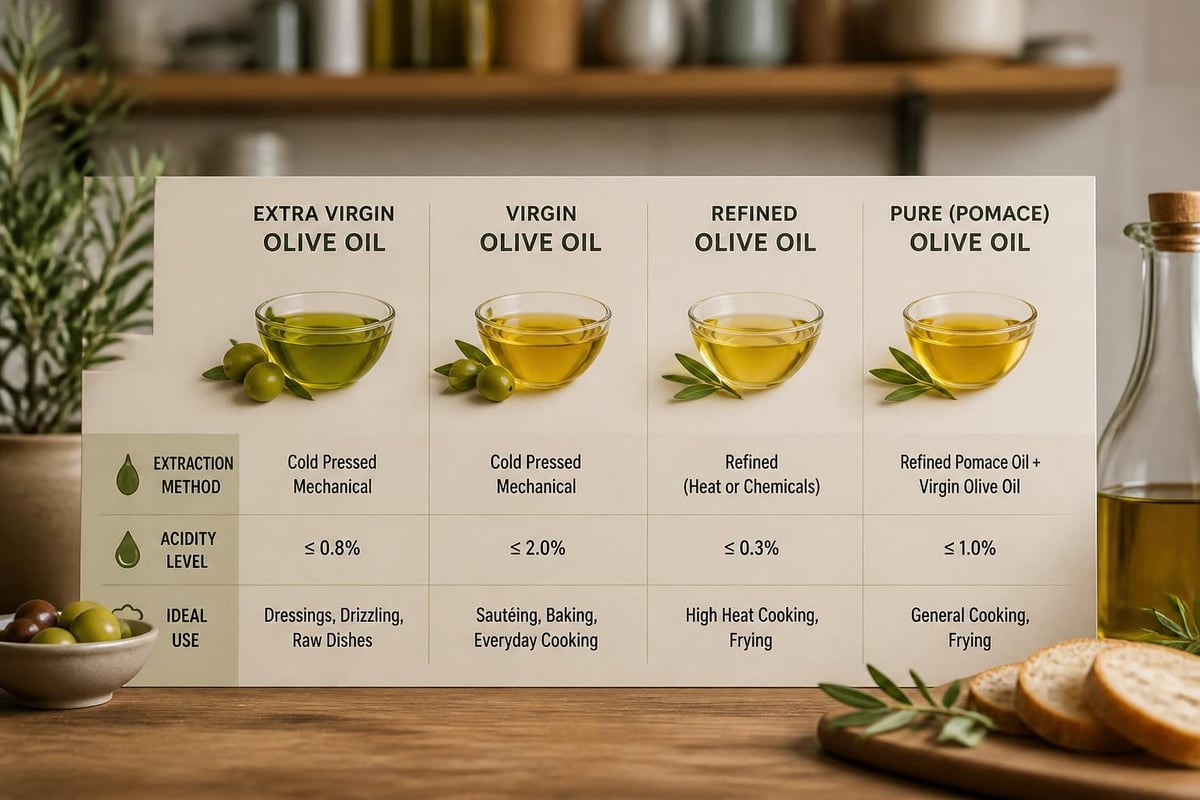
The relationship between olive oil and cooking begins with understanding quality grades and their distinct characteristics. Extra virgin olive oil (EVOO) represents the highest grade, produced through mechanical extraction without chemical refinement. This premium category preserves natural polyphenols, antioxidants, and flavor compounds that distinguish it from refined alternatives.
Virgin olive oil occupies the middle tier, meeting purity standards but exhibiting slightly higher acidity levels than EVOO. Refined olive oil undergoes chemical processing to remove defects, resulting in a neutral flavor profile and lighter color. Pure olive oil, despite its misleading name, combines refined olive oil with small amounts of virgin oil to restore minimal flavor characteristics.
Grade-Specific Cooking Recommendations
Different grades serve distinct culinary purposes based on their chemical stability and flavor intensity. Extra virgin olive oil excels in applications where its robust flavor enhances finished dishes: drizzling over vegetables, finishing soups, or creating vinaigrettes. Its polyphenol content actually provides protective effects during cooking, contrary to popular belief.
Refined olive oil suits high-volume commercial cooking operations requiring neutral flavor and consistent performance. Food manufacturers appreciate its stability in processed products, while restaurants value its cost-effectiveness for everyday sautéing and general-purpose cooking. The refining process removes free fatty acids that contribute to smoke and off-flavors, making it suitable for higher-temperature applications.
Debunking the Smoke Point Myth in Olive Oil and Cooking
The smoke point controversy has unnecessarily limited olive oil adoption in professional kitchens. Many culinary professionals avoid heating extra virgin olive oil based on published smoke point charts suggesting it degrades around 325-375°F (163-191°C). Recent research challenges this oversimplification, revealing that smoke point alone doesn’t reliably predict cooking performance in virgin olive oils.
Key factors affecting thermal stability include:
- Free fatty acid content (lower is more stable)
- Polyphenol concentration (higher provides protection)
- Storage conditions before use
- Presence of natural antioxidants
- Oil freshness and harvest date
Laboratory studies demonstrate that high-quality extra virgin olive oil remains stable at temperatures exceeding 400°F (204°C) during typical cooking durations. The protective effect of natural antioxidants counteracts oxidative degradation, particularly during shorter cooking times common in home and restaurant kitchens.
Practical Temperature Guidelines for Professional Settings
Restaurant kitchens and food manufacturers benefit from understanding realistic temperature thresholds rather than relying on theoretical smoke points. Sautéing vegetables typically occurs between 250-300°F (121-149°C), well within the safe range for all olive oil grades. Pan-frying proteins reaches 350-375°F (177-191°C), still manageable with quality extra virgin olive oil for short durations.
Deep-frying applications, reaching 350-375°F (177-191°C) continuously, represent the upper limit where refined olive oil outperforms virgin grades from an economic perspective. While EVOO technically withstands these temperatures, the cost premium makes refined alternatives more practical for high-volume frying operations. Oven roasting at 400-425°F (204-218°C) works well with extra virgin olive oil for shorter cooking periods under 45 minutes.
Health Benefits and Nutritional Considerations
The intersection of olive oil and cooking extends beyond culinary performance to significant health implications. Monounsaturated fatty acids, particularly oleic acid, comprise approximately 70-80% of olive oil's fatty acid profile. This composition aligns with World Health Organization recommendations for replacing saturated fats with healthier alternatives to reduce cardiovascular disease risk.
Epidemiological research consistently demonstrates measurable health outcomes associated with olive oil consumption. Harvard research has linked higher olive oil intake with reduced premature mortality risk, particularly from cardiovascular and neurodegenerative causes. These benefits extend beyond simple fatty acid composition to include bioactive compounds preserved in minimally processed oils.
| Nutrient Component | Function | Cooking Impact |
|---|---|---|
| Monounsaturated fats | Cardiovascular health | Highly stable during heating |
| Polyphenols | Antioxidant, anti-inflammatory | Partial degradation above 350°F |
| Vitamin E | Cell protection | Relatively heat-stable |
| Oleocanthal | Anti-inflammatory | Degrades with prolonged heating |
Nutrient Retention During Different Cooking Methods
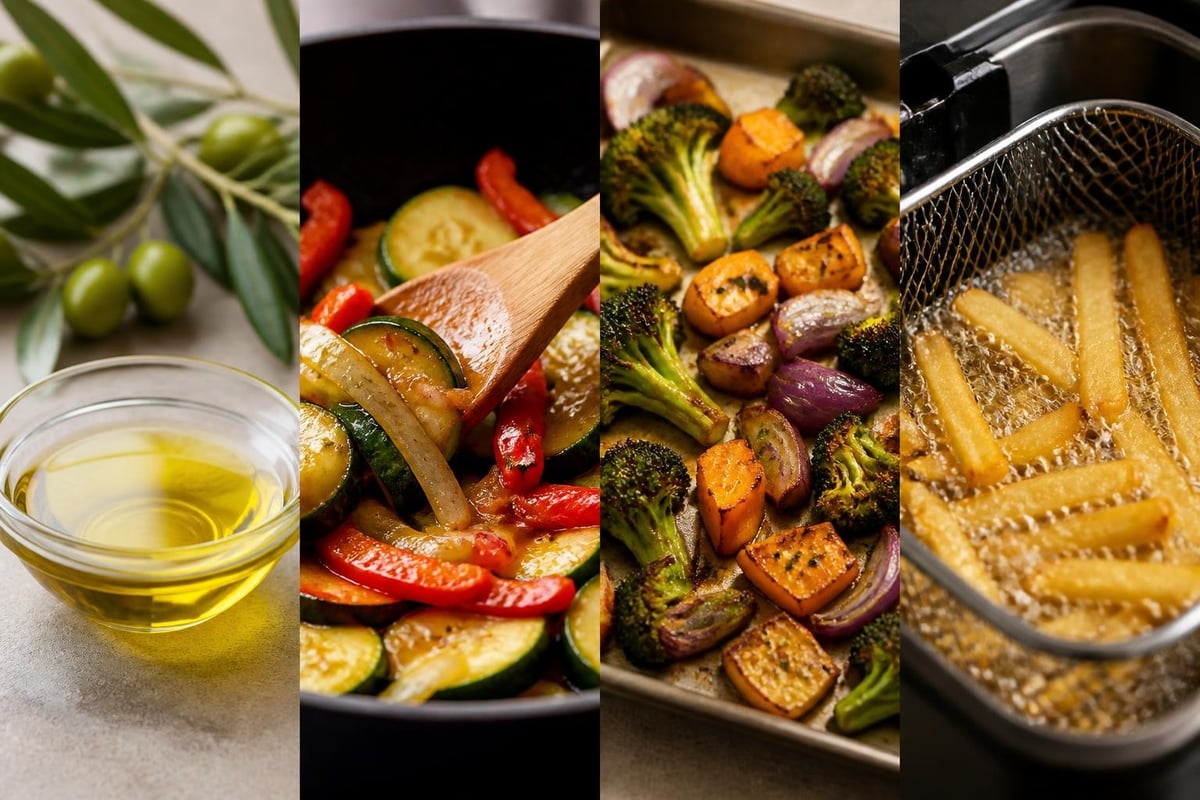
Understanding how cooking methods affect polyphenol retention helps optimize both nutrition and flavor in prepared dishes. Sautéing vegetables in extra virgin olive oil for under 10 minutes preserves approximately 75-85% of original polyphenol content. Longer cooking times and higher temperatures progressively reduce these beneficial compounds, though even degraded olive oil maintains superior fatty acid profiles compared to many alternatives.
Roasting vegetables with olive oil at 400°F (204°C) for 30-40 minutes retains approximately 60-70% of polyphenols while creating desirable flavor development through Maillard reactions. The key lies in balancing thermal degradation against culinary objectives. Deep-frying significantly reduces polyphenol content but doesn't eliminate the cardiovascular benefits associated with monounsaturated fat consumption.
Cold applications maximize nutrient preservation, making extra virgin olive oil ideal for salad dressings, marinades, and finishing touches. These unheated uses deliver full antioxidant capacity while showcasing the oil's distinctive flavor characteristics. Food manufacturers developing health-positioned products should consider positioning olive oil in minimal-heat or no-heat applications to support label claims.
Selecting Quality Olive Oil for Commercial and Culinary Use
The globalized olive oil market presents both opportunities and challenges for procurement professionals. Authenticity concerns persist across the industry, with adulteration and mislabeling affecting up to 20% of imported products in some markets. The European Union’s control systems have strengthened fraud prevention, but importers must implement their own verification protocols.
Quality indicators for bulk olive oil procurement include:
- Chemical analysis certificates (acidity, peroxide value, UV absorption)
- Organoleptic evaluation by trained tasters
- Harvest date transparency (fresher is better)
- Country of origin verification and traceability
- Third-party certification (PDO, PGI, organic)
- Supplier audit trails and quality management systems
Distributors and food manufacturers should prioritize suppliers offering complete traceability from grove to bottling. Single-origin oils provide consistency and authenticity verification, though blended products can deliver reliable quality when sourced from reputable suppliers with robust testing protocols. Price alone never guarantees quality, but suspiciously low prices relative to market rates signal potential adulteration.
Sensory Evaluation and Defect Recognition
Professional buyers benefit from developing basic sensory skills to assess olive oil quality upon receipt. Fresh, high-quality extra virgin olive oil exhibits fruity, bitter, and pungent characteristics in balanced proportions. These positive attributes indicate polyphenol presence and proper production methods.
Common defects include rancidity (oxidation creating stale, greasy notes), fustiness (fermentation during processing), and mustiness (improper storage creating moldy characteristics). Any of these defects disqualify oil from the extra virgin category, regardless of chemical parameters. Retailers and restaurant operators should train receiving staff to recognize obvious quality issues before oils enter inventory systems.
Practical Applications Across Foodservice and Manufacturing
The versatility of olive oil and cooking applications spans diverse culinary contexts, from quick-service restaurants to large-scale food manufacturing. Understanding optimal use cases maximizes both economic value and culinary results. Quick-service operations benefit from refined olive oil's neutral flavor and stable performance in high-volume frying applications, while fine dining establishments justify extra virgin olive oil's premium pricing through strategic finishing applications.
Food manufacturers face distinct considerations when formulating with olive oil. Shelf-life implications require careful evaluation, particularly in products stored at ambient temperature for extended periods. The same antioxidants that protect olive oil during cooking also extend product shelf life in many applications, making it advantageous for certain baked goods, sauces, and prepared foods.
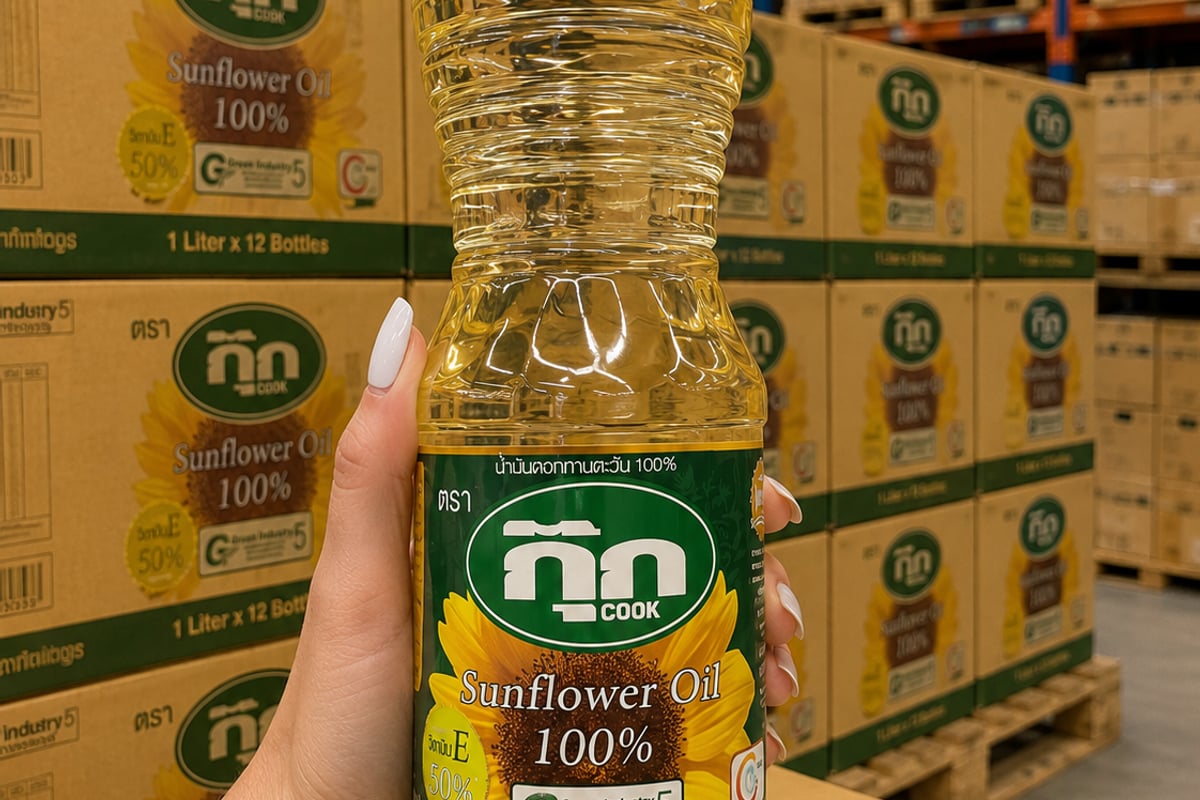
For operations seeking versatile, neutral-flavored cooking oils that complement olive oil in diverse applications, refined sunflower oil offers high smoke points and light characteristics suitable for Asian cuisine and health-conscious formulations.
Restaurant Kitchen Techniques and Best Practices
Professional kitchens optimize olive oil and cooking performance through strategic application matching. Cold-pressed extra virgin olive oil shines in unheated applications: emulsifying into Caesar dressing, finishing grilled fish, or drizzling over bruschetta. These uses justify premium pricing by showcasing distinctive flavor profiles impossible to achieve with refined alternatives.
Medium-heat cooking techniques benefit from mid-grade extra virgin olive oil or virgin olive oil blends. Sautéing aromatics, pan-roasting vegetables, or searing proteins all work well within the 250-350°F (121-177°C) range where olive oil performs reliably. Chefs should avoid continuous high-heat applications like extended deep-frying, where more economical refined oils deliver better value without sacrificing performance.
Storage, Handling, and Quality Maintenance
Proper storage practices preserve olive oil quality from receiving through final use. Light, heat, and oxygen represent the primary degradation factors, making storage conditions critical for maintaining nutritional and sensory characteristics. Commercial operators should store olive oil in cool, dark locations away from cooking equipment and windows.
Optimal storage conditions include:
- Temperature: 57-70°F (14-21°C) consistently
- Light exposure: Complete darkness or opaque containers
- Oxygen contact: Minimize headspace in partially used containers
- Container material: Stainless steel, dark glass, or food-grade plastic
- Inventory rotation: First-in, first-out protocols
Bulk storage in food manufacturing facilities requires temperature-controlled tanks with nitrogen blanketing to prevent oxidation. Transfer operations should minimize pumping distance and turbulence to reduce oxygen incorporation. Smaller foodservice operations can extend olive oil life by purchasing in appropriately sized containers that match usage rates, avoiding half-empty large containers that oxidize over time.
Shelf Life and Freshness Indicators
Unlike wine, olive oil doesn't improve with age. Peak quality occurs within 12-18 months of harvest for extra virgin grades, with gradual decline thereafter. Refined olive oils maintain stability longer due to removed compounds that contribute to oxidation, remaining acceptable for 18-24 months under proper storage.
Professional buyers should prioritize harvest date over "best by" dates, which often reflect bottling rather than production. A 2025 harvest bottled in early 2026 offers superior quality compared to a 2024 harvest bottled in late 2025, despite potentially similar best-by dates. Regular sensory evaluation during receiving helps identify declining quality before oils enter production or service.
Global Sourcing and Supply Chain Considerations
The olive oil market's geographical concentration creates unique supply chain dynamics. Mediterranean producers dominate global production, with Spain, Italy, Greece, and Tunisia accounting for over 75% of world output. Climate variations create significant year-to-year supply fluctuations, affecting both availability and pricing. The 2025-2026 season saw moderate production following several years of drought-impacted yields.
Importers and distributors must navigate complex provenance requirements, particularly when sourcing European oils. Protected Designation of Origin (PDO) and Protected Geographical Indication (PGI) certifications verify regional authenticity but add compliance costs. Some markets show strong consumer preference for specific origins, while others prioritize quality and price over geography.
| Origin Region | Characteristics | Typical Applications |
|---|---|---|
| Spain | Mild, fruity, high volume | General cooking, food manufacturing |
| Italy | Variable, often robust | Premium finishing, retail branding |
| Greece | Peppery, intense | Specialty products, Mediterranean cuisine |
| Tunisia | Balanced, value-oriented | Foodservice, private label |
| California | Fresh, grassy | Domestic US market preference |
Building Resilient Supply Relationships
Diversified sourcing strategies protect against regional supply disruptions while maintaining quality standards. Distributors serving food manufacturers should develop relationships with suppliers across multiple origins, enabling substitution during shortage periods. Contractual agreements with harvest-based pricing protect against mid-season price spikes while ensuring supplier commitment.
Quality specifications should emphasize measurable chemical parameters rather than subjective origin preferences. Free fatty acid content below 0.8% (extra virgin standard), peroxide values under 20 meq/kg, and specific UV absorption limits provide objective quality floors applicable across all origins. Sensory standards can accommodate regional style variations while maintaining defect-free requirements.
Addressing Common Misconceptions and Practical Guidance
The comprehensive cooking guidance available from industry authorities helps dispel persistent myths limiting olive oil adoption. One pervasive misconception suggests heating olive oil creates harmful compounds. Research demonstrates that properly stored, quality olive oil heated within reasonable culinary temperature ranges produces fewer oxidation products than many refined seed oils.
Another common belief holds that olive oil's distinct flavor overwhelms other ingredients. While robust extra virgin varieties certainly contribute noticeable taste, mild and light classifications offer subtle profiles suitable for delicate applications. Chefs can select flavor intensity to match culinary objectives rather than avoiding olive oil entirely.
Cost concerns often drive procurement decisions toward cheaper alternatives without considering total value. While olive oil commands premium pricing relative to commodity seed oils, its concentration of flavor means smaller quantities achieve desired results. A tablespoon of quality extra virgin olive oil finishing a dish delivers more impact than several tablespoons of neutral oil, potentially offsetting unit cost differences.
Practical Substitution Guidelines
Understanding when olive oil and cooking applications align with operational realities helps optimize procurement budgets. High-volume frying operations economically favor refined oils with neutral characteristics and lower pricing. Manufacturers producing shelf-stable products benefit from olive oil's natural antioxidants but must balance costs against margin requirements.
Specialty product positioning justifies olive oil's premium through marketing advantage and consumer perception. Products emphasizing Mediterranean heritage, heart health, or premium ingredients find olive oil's inclusion supports brand positioning beyond simple ingredient functionality. Private label developers should evaluate competitive positioning when deciding between olive oil and more economical alternatives.
Regulatory Compliance and Labeling Requirements
Food manufacturers and packagers must navigate complex regulatory frameworks governing olive oil labeling and marketing claims. The USDA provides guidance on proper designation and program compliance for oils including extra virgin olive oil. Grade designations carry legal implications, with "extra virgin" status requiring specific chemical and sensory criteria beyond simple olive oil derivation.
Health claims related to olive oil require careful substantiation and adherence to regulatory standards. While qualified health claims regarding monounsaturated fat and cardiovascular disease risk reduction enjoy regulatory acceptance in many jurisdictions, marketers must use precise, approved language. Structure-function claims about antioxidants or polyphenols face stricter scrutiny and varying international acceptance.
Country-of-origin labeling requirements have intensified globally, particularly for products marketed with geographical associations. Blended oils must clearly indicate all origin countries when specific origins appear in marketing materials. Traceability documentation supporting origin claims protects against regulatory challenges and consumer litigation.
International Standards and Trade Compliance
Importers must verify that olive oil shipments meet destination country standards, which vary globally. The International Olive Council establishes baseline standards adopted by many producing nations, but importing countries may impose additional requirements. Chemical parameter limits, permitted additives, and labeling requirements all require verification before customs clearance.
Free trade agreements affect duty rates and preferential access for olive oil imports. Distributors should understand relevant agreements between supplier countries and destination markets to optimize landed costs. Origin documentation supporting preferential treatment must meet strict chain-of-custody requirements to qualify for reduced tariff rates.
Mastering olive oil and cooking requires understanding quality grades, debunking smoke point myths, and matching applications to operational realities while maintaining proper storage protocols. Whether you operate a restaurant, manufacture food products, or distribute to retail markets, informed olive oil selection balances culinary performance, health benefits, and cost-effectiveness. Thai Cooking Oils supplies premium refined edible oils including olive oil alongside complementary cooking oils for importers, distributors, food manufacturers, and foodservice operators worldwide, providing the quality consistency and technical support that professional operations demand.
