
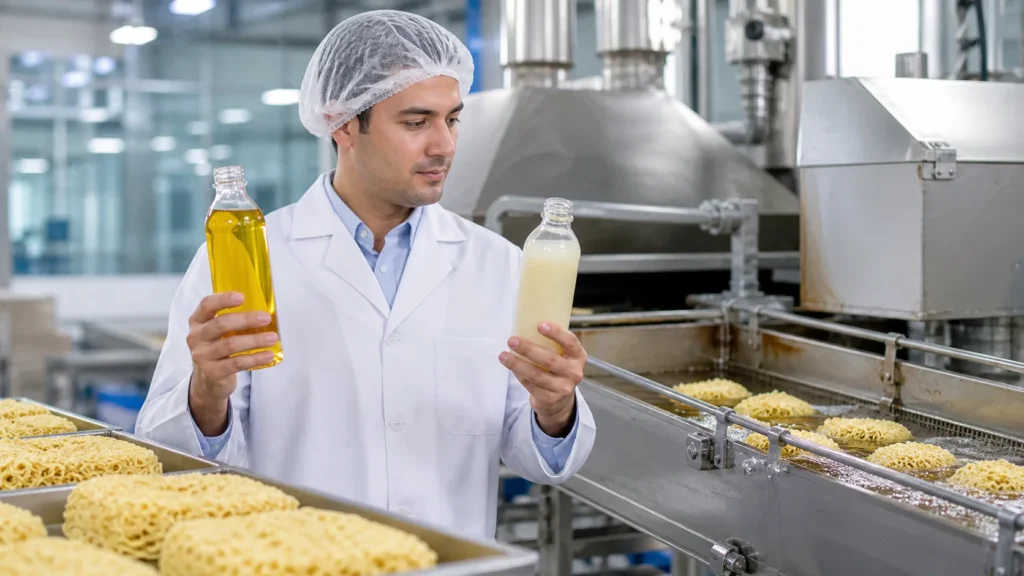
Improve Instant Noodle Quality with the Right Frying Fat
Choosing a frying fat for instant noodles affects much more than what goes into the fryer. It can shape noodle texture, cooking speed, shelf life, flavor, color, and the way customers feel about the finished product. We encourage you to begin with your noodle format, target market, and processing needs rather than assuming one fat works best for every line.
Vegetable edible oil and shortening can both play useful roles in instant noodle production. Liquid oils are often valued for smooth handling and blend flexibility, while shortening can bring a different melt profile and firmer structure. As Q4 production plans, holiday demand, and yearly supply agreements come into focus, this is a smart time to review how your frying fat performs from delivery through finished noodle storage.
Understand Vegetable Edible Oil and Shortening
Vegetable edible oil is generally liquid at room temperature. Depending on the blend and product needs, it may include sunflower, palm, canola, soybean, corn, coconut, rice bran, olive, or other vegetable oils. During instant noodle frying, the hot oil quickly removes moisture from steamed noodle strands. That process helps create the small openings that allow hot water to move through the noodle block during preparation.
Shortening is solid or semi-solid at room temperature. It may be made with palm fractions, fully hydrogenated oils, interesterified fats, or custom fat blends. Because it has a higher solid-fat content, shortening can behave differently in the fryer and as the noodle block cools.
When comparing options, we recommend asking for technical information that matches your production goals, including:
- Melting point and solid-fat content
- Peroxide value and free fatty acid information
- Oxidative stability details
- Flavor profile and color expectations
- Destination-market ingredient and labeling documents
A vegetable edible oil blend can be shaped around many needs, including frying performance, neutral taste, regional preferences, and fatty acid goals. High-oleic sunflower or canola oil may suit certain product plans, while palm olein may be selected for its frying characteristics and broad availability. Shortening may be a better fit when you need a particular melt profile, firmer noodle structure, or more controlled oil behavior after cooling.
Before commercial production, we suggest confirming ingredient declarations, saturated-fat targets, trans-fat rules, allergen policies, and clean-label preferences for the country where your noodles will be sold. A frying fat that works well in the plant still has to fit the label.
Match Frying Performance to Your Noodle Specification
Frying turns a steamed noodle strand into a shelf-stable noodle block with a porous structure. Those tiny channels matter because they help consumers rehydrate the noodles later. The selected frying fat can affect heat transfer, moisture removal, oil absorption, crispness, and final appearance.
Liquid vegetable edible oil can support even heat movement when frying temperature and filtration are managed carefully. Depending on the oil blend, it may create a lighter fried character and a consistent noodle color. Still, we do not recommend making assumptions based on the oil name alone. Plant trials provide a clearer answer than a label description.
Oil uptake depends on several connected factors, not just the frying medium. Noodle thickness, pre-fry moisture, frying temperature, dwell time, and cooling conditions all matter. A shortening-based system may show different results because its solid-fat profile changes how the fat behaves during frying and after the noodle block leaves the line.
For a fair comparison, we recommend measuring the same points in every trial batch:
- Finished noodle fat content
- Block weight and block integrity
- Breakage during handling and packing
- Rehydration time and water absorption
- Texture, aroma, taste, and aftertaste
Flavor and appearance deserve close attention, too. Frying fat that breaks down can lead to unwanted odor, darkening, foam, smoke, and lower product acceptance. Your oil choice should match the line’s operating time, oil turnover, filtration practices, and quality-control routine.
Balance Label Needs and Supply Reliability
The best frying-fat decision looks at total production performance, not just the product in the tank. Oil life, filtration losses, replenishment needs, product yield, waste, and consistency can all influence whether a frying system supports your goals. A stable frying medium can be worthwhile when it helps maintain predictable noodle quality under controlled operating conditions.
Packaging also deserves early discussion. Bulk tanker, flexitank, drum, IBC, and packaged formats each suit different storage capacities, hygiene procedures, production volumes, and export plans. We work with buyers who need bulk and packaged vegetable oil options, so we know packaging details should be settled before a production change reaches full scale.
Market expectations may guide your choice of sunflower, canola, rice bran, soybean, palm, or blended oils. Some brands place more weight on familiar ingredients, saturated-fat positioning, non-GMO preferences, or local dietary expectations. Those choices matter, but they should not override fryer performance. A label claim only helps when the fat can produce consistent noodles through repeated heating cycles.
Supply planning is equally important for manufacturers, distributors, and private-label buyers. We recommend qualifying suppliers based on consistent specifications, certificates of analysis, traceability documents, export support, shipment timing, and clear quality procedures. When you are planning upcoming contracts, it also helps to consider crop seasons, port conditions, lead times, and currency movement.
Plan Q4 Trials Before Peak Demand
October is a useful checkpoint for reviewing supplier performance, confirming production forecasts, and testing frying-fat options before yearly purchasing decisions are locked in. Running trials before holiday output rises or before a planned maintenance shutdown gives technical teams more room to compare results without placing extra pressure on a high-volume line.
Keep each trial as controlled as possible. Use the same noodle formula, steaming conditions, frying settings, filtration routine, and evaluation method for each option. That way, the differences you see are more likely to come from the frying fat rather than from a change elsewhere in the process.
Your review should include fryer temperature stability, foam, smoke, color change, oil turnover, oil uptake, block strength, and rehydration quality. Sensory checks should happen with fresh noodles and with stored samples, since aroma, mouthfeel, and aftertaste can shift over time.
Before making a full switch, confirm product specifications, minimum order requirements, packaging needs, shipping documents, delivery timing, and quality-control steps. A careful commercial-readiness check can prevent an avoidable interruption when production demand is at its highest.
Select the Frying Fat That Supports Your Noodle Goals
Vegetable oils and shortenings each have a place in instant noodle production. Liquid oils can offer flexible handling, customizable blends, and useful label options. Shortening may better support a certain texture, melt profile, or noodle structure. The right answer comes from the performance you see in your own process.
As you compare options, keep the finished noodle at the center of the decision. Choose the frying fat that delivers the texture, rehydration, appearance, flavor, production consistency, and supply confidence your customers expect.
Make Your Noodle Frying Strategy More Informed
Thai Cooking Oils helps manufacturers evaluate sourcing considerations and performance factors for vegetable edible oil. Our buying insights can support more confident decisions across product development, procurement, and production planning. To discuss your wholesale requirements, contact us for a tailored quote.
