
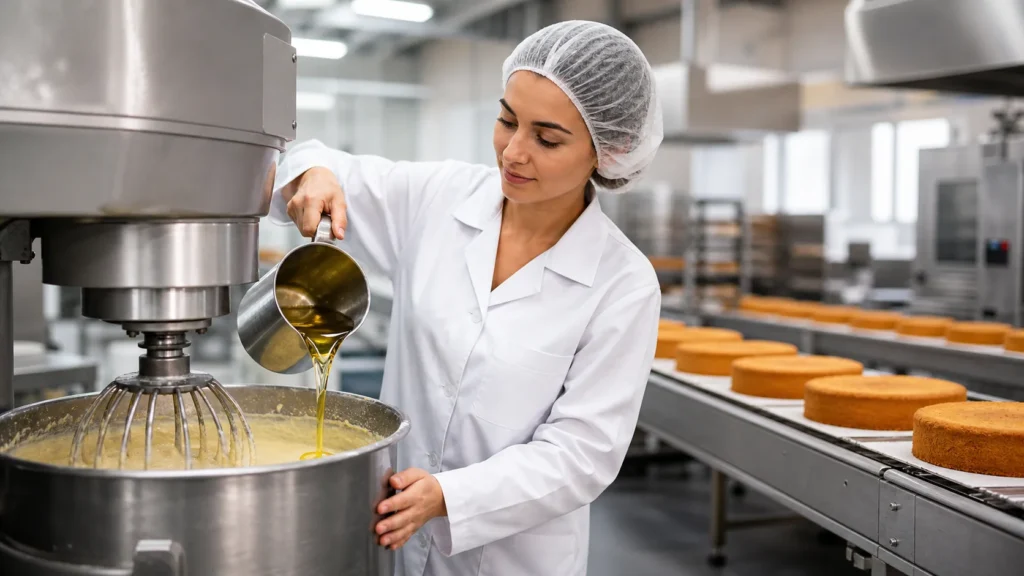
Make Industrial Cakes Consistent with Canola Oil
Baking with canola oil can be a practical choice when you need cakes to perform the same way across large production runs. Refined canola oil has a mild taste and a liquid form that can support smooth handling, flexible flavors, and steady mixing in an industrial setting. Still, changing fats is not as simple as swapping one ingredient for another at the same level.
We recommend looking at the whole system, including aeration, emulsification, baking behavior, finished texture, shelf life, and the format of the cake itself. A snack cake, spice loaf, sheet cake, and packaged cupcake can all respond differently to the same oil.
September is a useful time to review formulas before holiday production speeds up. Seasonal spice cakes, holiday items, private-label retail programs, and year-end snack cake demand often require careful planning. By validating formulas and confirming oil supply early, you can avoid rushed substitutions once production schedules become crowded.
How Canola Oil Affects Structure and Eating Quality
Canola oil brings liquid-fat behavior to a cake formula. That differs from shortening, butter, and palm-based fats, which provide more solid structure. Because liquid oil does not trap air through creaming in the same way, it can affect batter thickness, air incorporation, cake height, and the openness of the crumb.
For that reason, we encourage product teams to review more than the fat percentage. An oil-based cake may need changes to emulsifiers, stabilizers, mixing time, or sugar particle size to keep the batter uniform and the finished cake predictable.
Refined canola oil also gives formulators broad flavor freedom. Its mild profile can allow key notes to stand out, including:
- Vanilla and dairy flavors
- Chocolate and cocoa notes
- Fruit fillings and flavorings
- Cinnamon, ginger, and other seasonal spices
Its liquid form may also support a soft, moist eating experience. This can be especially useful in muffins, loaf cakes, snack cakes, and some sheet-cake applications. Yet the right result depends on the product. A dense pound cake may need a different fat approach than an airy layer cake or a long-shelf-life cupcake.
When baking with canola oil, we suggest judging results by the qualities your buyers and consumers notice: volume, crumb texture, moisture retention, appearance, and overall eating quality. A lower ingredient cost does not help if the cake no longer meets its intended standard.
Run Trials That Protect Volume and Crumb
A controlled trial process helps separate real formula changes from normal production variation. Start with a control recipe and record its baseline performance before changing the fat system. Small, planned changes are easier to evaluate than a full formula rewrite.
Useful measures to document include:
- Batter specific gravity and viscosity
- Deposit weight and batter hold time
- Oven loss, cake height, and final weight
- Crumb cell structure and visual appearance
- Softness, moisture, and sensory texture over time
From there, we recommend testing canola oil changes in pilot batches before moving onto a full production line. Compare each batch under the same conditions whenever possible. If volume changes, the cause may be the oil level, but it could also be mixing speed, deposit temperature, leavening, water balance, or another variable.
Moving from solid fats to liquid oil often calls for process adjustments. Since canola oil does not cream like shortening, you may need to assess emulsifier choice, egg solids, leavening balance, starches, gums, sugar type, and water level. These parts of the formula work together to hold air, manage viscosity, and prevent a crumb that is greasy, too compact, or overly open.
Continuous lines deserve special attention. Batter can change while it waits, especially when deposit temperatures shift or hold times become longer. Set acceptable ranges for height, weight, moisture, softness, and appearance before trials begin. Clear approval standards make it much easier to move a formula from the test kitchen to the plant floor with confidence.
Manage Shelf Life, Flavor, and Label Requirements
Oil quality is one part of finished-cake shelf life. The full formula, package, storage conditions, and distribution environment all matter, but the oil should still match the quality needs of the program. Before approving a supply, procurement and quality teams should confirm agreed specifications for refined canola oil.
We recommend reviewing items such as freshness indicators, odor, color, moisture and impurities, plus the quality documents required by your internal process or customer program. Finished cakes should also go through real-time or accelerated shelf-life checks that look at flavor stability, softness, rancidity risk, and package performance.
Label review belongs in the same planning stage. Ingredient declarations, allergen controls, nutrition-label implications, and customer-specific requirements can vary among retail programs and export destinations. If a cake carries a nutrition, ingredient, or free-from claim, regulatory and quality teams should confirm that every part of the formula supports it.
Aligning the oil specification with the intended shelf life and market destination helps prevent an avoidable mismatch. A purchasing choice that works for a short local program may not be the right fit for a packaged cake traveling through a longer export distribution chain.
Plan Holiday Production and Oil Supply
Fall production planning often brings several moving parts together at once. Holiday cakes may involve higher output, limited-time flavors, special packaging, and tight retail deadlines. Forecasting canola oil alongside flour, sugar, cocoa, spices, packaging, and co-manufacturing capacity can make the production plan more stable.
Early supply discussions also reduce the chance of last-minute ingredient changes. Those changes can affect cake performance and may create extra label-review work, particularly for private-label or export-bound products.
As a Thailand-based supplier and exporter of refined edible oils, we encourage buyers to define the practical details of their program early. Helpful topics include bulk versus packaged delivery, container loading options, private-label packaging, minimum order quantities, lead times, quality specifications, export documentation, and destination-country requirements.
It also helps us understand whether you are planning one high-volume cake line, several product categories, or a blended fat system. That context supports better packaging and delivery planning for food manufacturers, distributors, retailers, and foodservice buyers worldwide.
Put Your Canola Oil Program Into Production
A successful canola-oil cake program comes from careful formula work, controlled processing, shelf-life testing, and dependable supply planning. Start with defined product goals, test changes in stages, and confirm oil specifications before committing to full-scale output.
For holiday and private-label programs, the strongest approach is to lock in the cake attributes that matter most before demand peaks. When volume, crumb, moisture, flavor, labeling, and supply requirements are aligned, baking with canola oil can support consistent industrial cake production.
Secure a Dependable Canola Oil Supply
Thai Cooking Oils provides wholesale options tailored to the needs of industrial cake manufacturers. Learn more about baking with canola oil and the specifications available for your production program. For pricing, documentation, or supply details, contact us to request a wholesale quote.
