
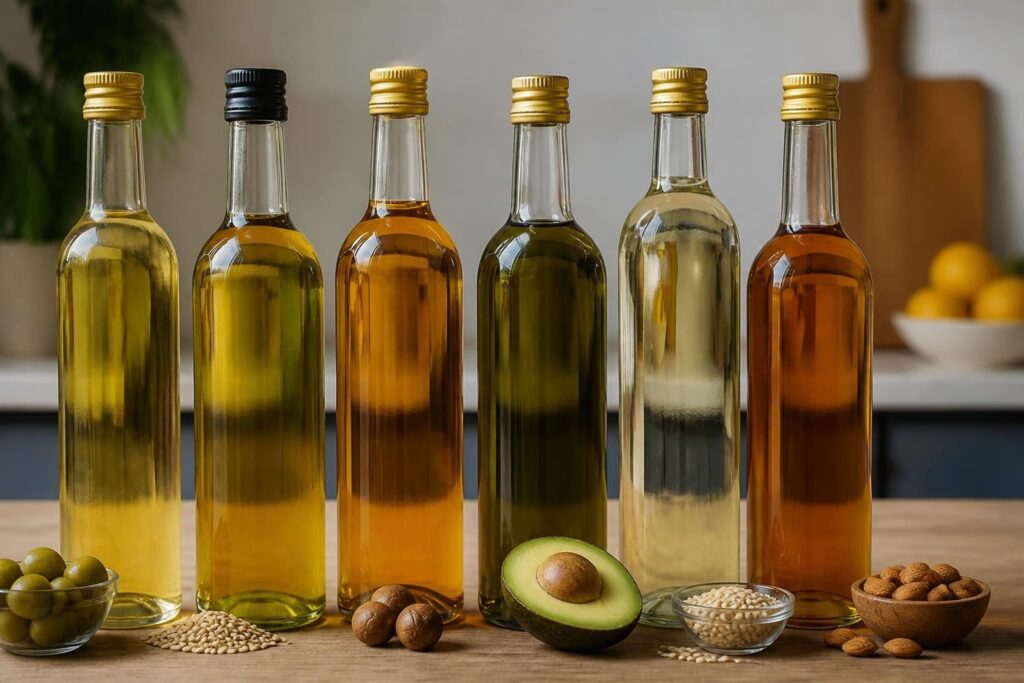
Selecting the best cooking oil for your kitchen, restaurant, or food manufacturing operation involves understanding far more than price per liter. The right oil affects flavor, nutrition, shelf stability, cooking performance, and ultimately, your customers' health and satisfaction. With dozens of vegetable oils available in 2026, each boasting unique fatty acid profiles and functional properties, making an informed choice requires evaluating multiple factors including smoke point, oxidative stability, nutritional composition, and intended application. This comprehensive guide examines the science behind cooking oils and provides actionable criteria to help food service professionals, distributors, and manufacturers select the best cooking oil for their specific needs.
Understanding Cooking Oil Fundamentals
Before identifying the best cooking oil, it's essential to understand what differentiates one oil from another at the molecular level. All cooking oils are composed primarily of triglycerides, but the specific fatty acids within those triglycerides determine an oil's behavior under heat, nutritional value, and stability during storage.
Fatty Acid Composition Matters
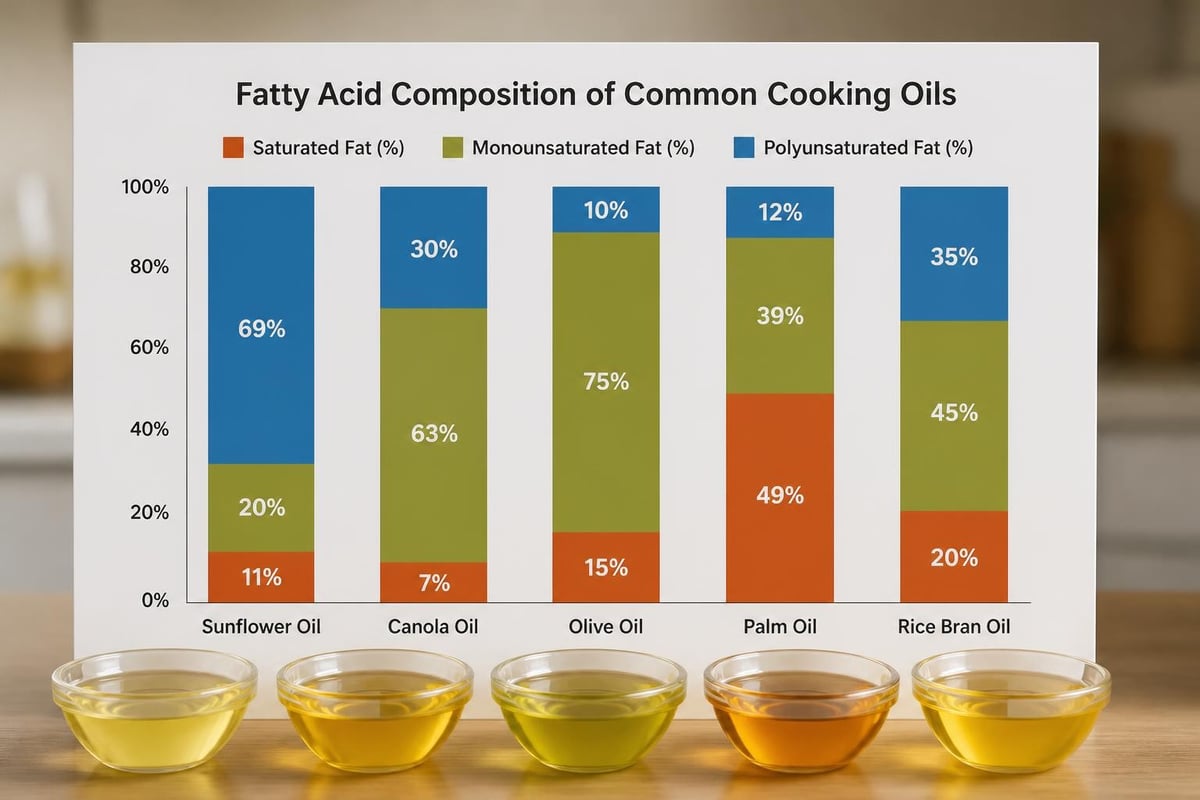
Cooking oils contain varying ratios of three main fatty acid types: saturated, monounsaturated, and polyunsaturated fats. Saturated fats remain solid at room temperature and resist oxidation, making them stable for high-heat cooking but potentially less favorable from a cardiovascular health perspective when consumed in excess. Monounsaturated fats, particularly oleic acid, offer an excellent balance of heat stability and heart-health benefits. Polyunsaturated fats, including essential omega-3 and omega-6 fatty acids, provide important nutritional benefits but oxidize more readily under heat and light.
The USDA FoodData Central database provides detailed fatty acid profiles for all common cooking oils, enabling evidence-based comparisons. Understanding these compositions helps predict how an oil will perform in different cooking applications and how it contributes to overall dietary quality.
Smoke Point and Cooking Applications
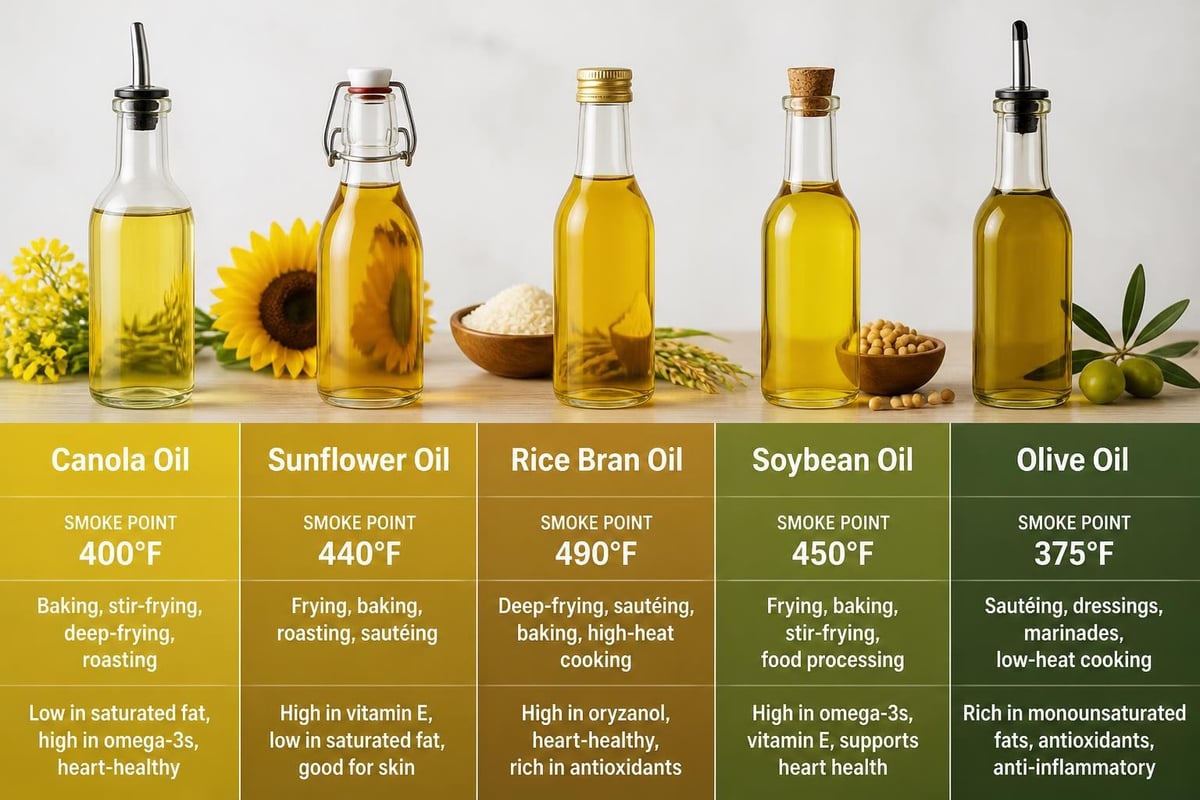
Smoke point-the temperature at which an oil begins to break down and produce visible smoke-is one of the most critical specifications for determining the best cooking oil for specific methods. When oil reaches its smoke point, it not only develops unpleasant flavors but also generates potentially harmful compounds including free radicals and acrolein.
| Cooking Method | Required Smoke Point | Suitable Oils |
|---|---|---|
| Deep frying | 375-450°F (190-232°C) | Refined sunflower, canola, rice bran, refined palm |
| Stir-frying | 375-400°F (190-204°C) | Canola, rice bran, refined peanut |
| Sautéing | 325-375°F (163-190°C) | Olive (refined), sunflower, soybean |
| Baking | 325-350°F (163-177°C) | Canola, sunflower, soybean |
| Dressings (no heat) | N/A | Extra virgin olive, unrefined oils |
Refined oils generally have higher smoke points than their unrefined counterparts because the refining process removes free fatty acids, phospholipids, and other compounds that lower thermal stability.
Evaluating Health Characteristics
Nutritional quality has become a decisive factor in determining the best cooking oil, particularly as consumers and food service professionals become more health-conscious. The World Health Organization recommends eliminating industrially produced trans fats and limiting saturated fat intake to reduce cardiovascular disease risk.
Heart Health and Fatty Acid Balance
Research consistently demonstrates that replacing saturated fats with unsaturated fats, particularly monounsaturated fatty acids, improves cardiovascular outcomes. An umbrella review published in 2024 synthesized evidence from multiple meta-analyses, concluding that olive oil consumption is associated with reduced cardiovascular disease, stroke, and all-cause mortality.
However, the best cooking oil for heart health isn't necessarily limited to olive oil. According to research published in PMC, oils can be ranked by nutritional quality based on their fatty acid composition, with oils high in monounsaturated fats and balanced omega-6 to omega-3 ratios receiving favorable scores.
Key nutritional considerations include:
- Saturated fat content: Lower is generally better for cardiovascular health
- Omega-6 to omega-3 ratio: Balanced ratios (closer to 4:1 or lower) are preferable
- Vitamin E content: Natural antioxidant that extends shelf life and provides nutritional benefits
- Phytosterols and other bioactive compounds: Plant sterols can help lower cholesterol absorption
Oxidative Stability and Shelf Life
Beyond immediate cooking performance, the best cooking oil must maintain quality during storage and distribution. Oxidative stability-resistance to rancidity-depends on fatty acid composition, natural antioxidant content, and refining quality.
Oils high in polyunsaturated fats oxidize more rapidly, especially when exposed to heat, light, and oxygen. Food manufacturers and distributors must balance nutritional benefits against practical shelf-life requirements. Modern refining processes can significantly improve stability while preserving beneficial nutrients when executed with precision and quality control.
Comparing Top Cooking Oil Options
Canola Oil: The Versatile Performer
Canola oil stands out as one of the most balanced options available, combining health benefits with exceptional cooking performance. With the lowest saturated fat content of any common cooking oil (approximately seven percent) and a favorable omega-6 to omega-3 ratio, canola oil aligns well with current nutritional recommendations.
The high smoke point of 400°F (204°C) makes refined canola oil suitable for virtually any cooking method, from deep frying to baking. Its neutral flavor profile doesn't interfere with recipe ingredients, making it a preferred choice for food manufacturers producing diverse product lines.
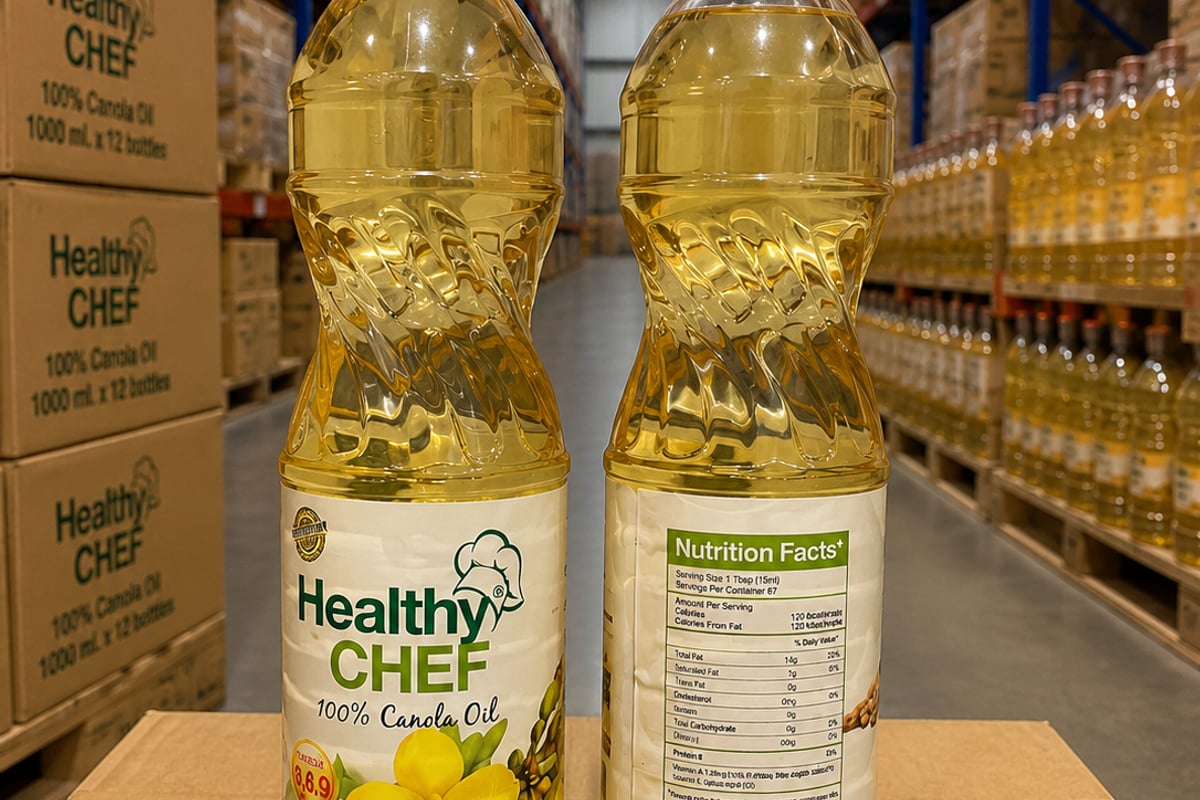
Canola oil refined to premium specifications offers moisture content below 0.1 percent and free fatty acid content under 0.05 percent, ensuring consistent quality for industrial applications. For restaurants and food service operations seeking a single all-purpose oil that delivers on both health and performance, canola oil represents an excellent solution.
Sunflower Oil: High-Heat Stability
Refined sunflower oil, particularly high-oleic varieties, provides exceptional thermal stability with smoke points approaching 450°F (232°C). This makes it ideal for commercial deep-frying operations where oil must withstand prolonged exposure to high temperatures without breaking down.
Standard sunflower oil contains predominantly polyunsaturated fats, offering nutritional benefits but requiring more frequent replacement in high-heat applications. High-oleic sunflower oil, bred to contain over 80 percent monounsaturated fatty acids, combines the stability of olive oil with a higher smoke point and neutral flavor.
Rice Bran Oil: Asian Cuisine Specialist
Rice bran oil has gained recognition as the best cooking oil for high-heat Asian cooking methods. With a smoke point around 450°F (232°C) and a subtle, nutty flavor that complements Asian dishes, it performs exceptionally in wok cooking and deep frying.
Nutritionally, rice bran oil contains gamma-oryzanol, a compound associated with cholesterol-lowering properties, and a well-balanced fatty acid profile featuring approximately 47 percent monounsaturated, 33 percent polyunsaturated, and 20 percent saturated fats. This composition provides both stability and health benefits.
Soybean Oil: The Economical Choice
Soybean oil represents one of the most widely used cooking oils globally, largely due to its accessibility and cost-effectiveness. While higher in polyunsaturated fats than some alternatives, refined soybean oil offers decent heat stability for most cooking applications with a smoke point around 450°F (232°C) when fully refined.
Rich in vitamin E and containing both omega-3 and omega-6 fatty acids, soybean oil contributes essential nutrients. Food manufacturers often select soybean oil for products where neutral flavor, consistent supply, and competitive pricing are priorities.
Olive Oil: The Mediterranean Standard
Olive oil, particularly extra virgin varieties, has earned recognition as the gold standard for health benefits. As Harvard Health Publishing notes, the monounsaturated fats and polyphenolic compounds in olive oil support cardiovascular health when used as part of a Mediterranean-style diet.
However, extra virgin olive oil's lower smoke point (325-375°F/163-190°C) and pronounced flavor make it less suitable for high-heat cooking or neutral-tasting applications. Refined olive oil offers higher smoke points while retaining some health benefits, representing a middle ground for food service operations.
Industry-Specific Considerations
Food Manufacturing Requirements
Food manufacturers must evaluate cooking oils through the lens of product specifications, processing requirements, regulatory compliance, and supply chain reliability. The best cooking oil for manufacturing isn't always the healthiest option in isolation but rather the one that delivers consistent quality, meets formulation requirements, and maintains stability throughout product shelf life.
Critical manufacturing criteria include:
- Batch-to-batch consistency: Tight specifications for fatty acid composition, moisture content, and peroxide value
- Processing compatibility: Behavior during emulsification, spray coating, or other manufacturing processes
- Label claims: Support for "low saturated fat," "source of omega-3," or other marketing positions
- Supply security: Reliable sourcing with minimal seasonal variation
Manufacturers producing snack foods, baked goods, or fried products often prioritize oils with high oxidative stability and extended fry life. Those formulating health-focused products may accept shorter shelf life in exchange for superior fatty acid profiles.
Restaurant and Food Service Applications
For restaurants and institutional food service, the best cooking oil balances cost, performance, and customer health expectations. High-volume operations must consider oil absorption rates, fry life, and waste disposal costs alongside nutritional factors.
Cleveland Clinic guidance recommends matching oil selection to cooking method, using high-smoke-point refined oils for frying and sautéing while reserving premium oils like extra virgin olive oil for finishing dishes and dressings.
Fast-casual restaurants and health-conscious establishments increasingly promote their oil choices as part of their brand positioning, making canola, rice bran, or high-oleic oils attractive options despite potentially higher costs.
Making Your Selection
Determining the best cooking oil requires aligning your specific priorities with available options. No single oil excels in every category, so your ideal choice depends on weighing multiple factors.
Decision Framework
Consider these questions when evaluating oils:
- What cooking methods dominate your operation? High-heat methods demand high-smoke-point oils
- How important are health claims to your customers? Consumer-facing operations may prioritize heart-healthy options
- What shelf life do your products require? Longer-lasting products need oils with superior oxidative stability
- Is flavor neutrality essential? Some applications require oils that don't impart taste
- What are your volume and budget constraints? Some premium oils offer benefits but at significantly higher costs
Quality Specifications to Verify
Regardless of which oil you select, insist on detailed specifications and quality certifications. The European Food Safety Authority provides scientific opinions on dietary fats that inform international quality standards.
Essential specifications include:
- Free fatty acid (FFA) content
- Peroxide value
- Moisture and volatile matter
- Soap content
- Color and clarity measurements
- Heavy metals testing
- Pesticide residue analysis
Premium suppliers provide comprehensive certificates of analysis with each shipment, ensuring traceability and consistency.
Emerging Trends in Cooking Oils
The cooking oil landscape continues to evolve with new breeding techniques, refining technologies, and consumer preferences. High-oleic versions of traditional oils-including sunflower, canola, and soybean-offer improved stability without sacrificing nutritional benefits. These engineered varieties are increasingly becoming the new standard in food manufacturing.
Sustainability certifications, carbon footprint disclosures, and transparent sourcing practices now influence purchasing decisions, particularly for larger food service chains and consumer-packaged goods manufacturers. The best cooking oil in 2026 often must meet environmental and social criteria alongside functional and nutritional requirements.
Fortification presents another trend, with some oils enhanced with additional vitamin A, vitamin D, or omega-3 fatty acids to address specific nutritional gaps in target markets. Food manufacturers serving regions with identified micronutrient deficiencies may find fortified oils advantageous for both public health impact and marketing differentiation.
Regional Preferences and Global Standards
Different markets exhibit distinct preferences for cooking oils based on culinary traditions, local production capabilities, and regulatory environments. Understanding these regional patterns helps distributors and exporters position products effectively.
Regional oil preferences:
- North America: Canola and soybean oil dominate, with growing interest in high-oleic variants
- Europe: Sunflower and rapeseed (canola) oil are standard, with olive oil prominent in Mediterranean countries
- Asia-Pacific: Palm oil, rice bran oil, and soybean oil lead, with coconut oil in tropical regions
- Middle East and Africa: Sunflower oil and palm oil are widely used, with olive oil in North Africa
International trade in cooking oils requires compliance with Codex Alimentarius standards and destination-country regulations. Premium suppliers maintain certifications such as ISO 22000, HACCP, and GMP to facilitate global distribution.
Selecting the best cooking oil ultimately depends on balancing heat stability, nutritional profile, flavor characteristics, and cost against your specific operational requirements and customer expectations. Whether you prioritize canola oil's versatility, rice bran oil's high-heat performance, or olive oil's health benefits, informed selection ensures optimal results in your kitchen or manufacturing facility. Thai Cooking Oils provides refined vegetable oils meeting international specifications with consistent quality, comprehensive documentation, and reliable global supply-partnering with food manufacturers, distributors, and food service operators to deliver the precise oil grades their operations demand.
