

Finding a reliable sunflower oil supplier represents a critical decision for food manufacturers, distributors, restaurants, and retailers worldwide. As global demand for versatile, health-conscious cooking oils continues to expand in 2026, establishing partnerships with qualified suppliers becomes essential for maintaining product quality, competitive pricing, and supply chain stability. The sunflower oil market encompasses diverse production methods, quality specifications, and regional sourcing considerations that directly impact your business operations and customer satisfaction. Understanding how to evaluate suppliers, verify quality standards, and navigate international procurement processes will position your organization for long-term success in an increasingly competitive marketplace.
Understanding Sunflower Oil Production and Quality Standards
The foundation of selecting an excellent sunflower oil supplier begins with comprehending the production process and quality benchmarks that separate premium products from inferior alternatives. Sunflower oil production involves multiple stages from seed selection through refining, each contributing to the final product's nutritional profile, stability, and performance characteristics.
Extraction Methods and Their Impact
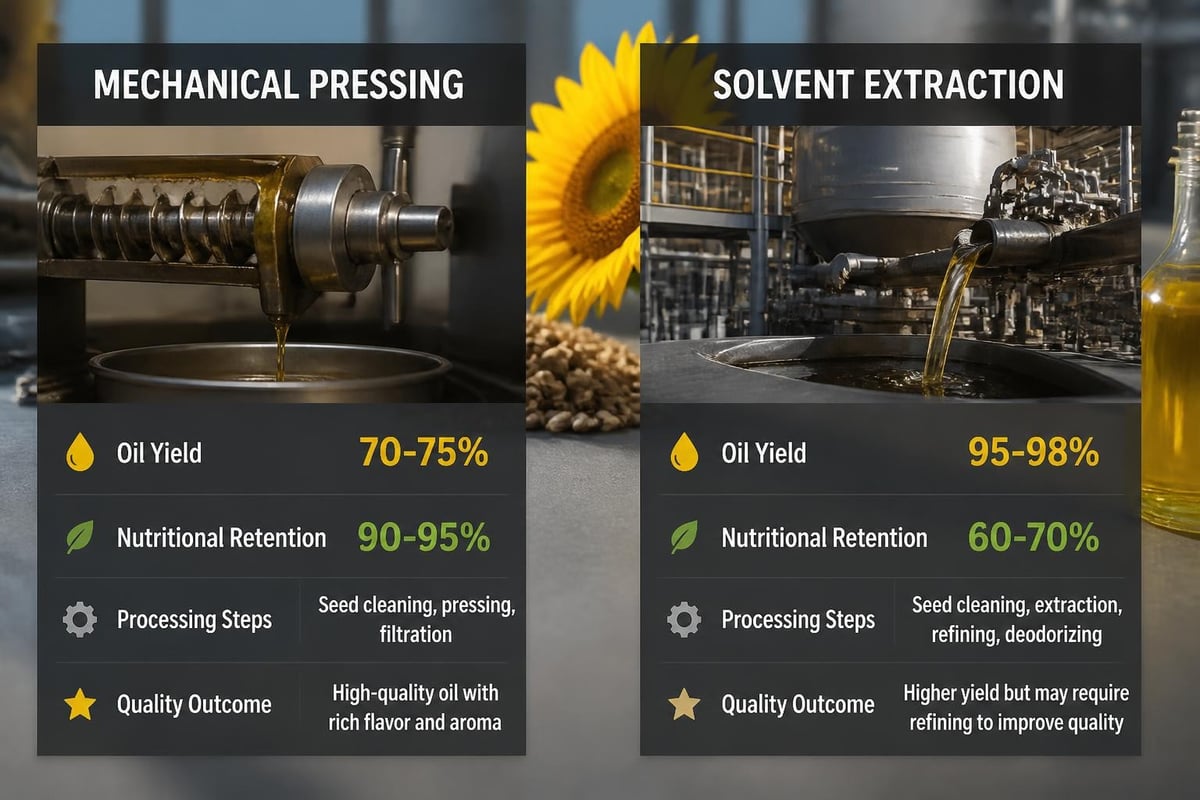
Modern sunflower oil suppliers employ two primary extraction methods: mechanical pressing and solvent extraction. Mechanical pressing, also known as expeller pressing or cold pressing, applies physical force to crush sunflower seeds and extract oil without chemical additives. This method typically yields oil with richer flavor profiles and enhanced nutritional retention, though at lower extraction rates of approximately 35-40%.
Solvent extraction maximizes oil yield by using food-grade hexane to separate oil from seed material. This industrial process achieves extraction rates exceeding 95%, making it economically favorable for large-scale operations. Following extraction, the oil undergoes solvent removal through evaporation and distillation to ensure safety and purity.
Key extraction considerations when evaluating suppliers:
- Production capacity and scalability
- Technology sophistication and automation levels
- Residual solvent testing protocols
- Energy efficiency and environmental practices
- Traceability from seed to finished product
Refining Processes and Quality Specifications
Refined sunflower oil undergoes systematic treatment to remove impurities, free fatty acids, pigments, and odors while preserving beneficial compounds. The refining process typically includes degumming, neutralization, bleaching, and deodorization-collectively known as RBD processing.
Professional sunflower oil suppliers maintain strict quality parameters throughout refining:
| Quality Parameter | Standard Range | Testing Method |
|---|---|---|
| Free Fatty Acid (FFA) | 0.03-0.05% | Titration |
| Peroxide Value | <2.0 meq/kg | Iodometric |
| Moisture Content | <0.1% | Karl Fischer |
| Color (Lovibond) | R 1.0, Y 10 max | Spectrophotometric |
| Smoke Point | 225-230°C | AOCS method |
These specifications directly influence shelf life, cooking performance, and application suitability across food manufacturing, foodservice, and retail sectors.
Geographic Sourcing Considerations and Production Regions
When partnering with a sunflower oil supplier, understanding global production landscapes helps optimize your supply chain strategy. The international sunflower oil market exhibits distinct regional characteristics affecting availability, pricing, and quality attributes.
Major Production Regions
Ukraine and Russia historically dominated global sunflower production, collectively accounting for over 50% of world output. However, geopolitical instability since 2022 has redirected sourcing strategies toward more diverse geographic portfolios.
Argentina emerges as a significant alternative source, producing high-quality sunflower oil with established export infrastructure targeting South American and Asian markets. The country's favorable climate conditions and agricultural expertise support consistent production volumes.
European Union countries including France, Romania, and Bulgaria maintain quality-focused production systems with stringent food safety regulations. European suppliers often appeal to buyers prioritizing organic certification, non-GMO verification, and sustainability credentials.
Asian suppliers, particularly those operating in Thailand, Vietnam, and India, offer competitive pricing structures and strategic geographic positioning for Pacific Rim markets. These suppliers frequently blend regional production with imported crude oil for refining, creating flexible sourcing models.
Seasonal Availability and Supply Chain Planning
Sunflower harvesting cycles vary by hemisphere, creating natural supply fluctuations that experienced suppliers manage through strategic inventory planning:
- Northern Hemisphere harvest (August-November): Peak production in Ukraine, Russia, EU countries
- Southern Hemisphere harvest (February-May): Primary production in Argentina
- Year-round availability: Achieved through supplier networks, storage capacity, and blending operations
Reliable sunflower oil suppliers maintain adequate storage facilities, typically offering 3-6 months of inventory buffer to ensure consistent delivery schedules regardless of harvest timing or transportation disruptions.
Supplier Evaluation Criteria for Long-Term Partnerships
Selecting the right sunflower oil supplier requires systematic evaluation beyond basic price comparisons. Comprehensive assessment frameworks consider multiple dimensions of supplier capability, reliability, and alignment with your business requirements.
Certification and Compliance Standards
Food safety certifications serve as fundamental prerequisites for any reputable supplier. Look for internationally recognized standards including:
- ISO 22000 (Food Safety Management)
- HACCP (Hazard Analysis Critical Control Points)
- GMP (Good Manufacturing Practices)
- BRC (British Retail Consortium) or equivalent
- Halal and Kosher certifications (if relevant to your markets)
Quality management systems demonstrate supplier commitment to consistent product standards and continuous improvement. ISO 9001 certification indicates established quality control frameworks and documented procedures.
Sustainability certifications increasingly influence purchasing decisions, particularly for consumer-facing brands. RSPO (Roundtable on Sustainable Palm Oil) principles extend to other vegetable oils, while supplier-specific sustainability reports provide transparency regarding environmental practices.

Production Capacity and Technical Capabilities
Understanding supplier infrastructure helps assess whether they can scale with your business growth and handle specialized requirements:
- Processing capacity: Monthly/annual production volumes in metric tons
- Storage facilities: Temperature-controlled warehousing capacity
- Packaging flexibility: Bulk (flexitanks, ISO tanks, drums) and retail packaging options
- Quality laboratory: In-house testing capabilities versus third-party reliance
- R&D capabilities: Custom formulation support and product development
Supply Chain Transparency and Traceability
Modern procurement practices demand visibility throughout the supply chain. Leading sunflower oil suppliers implement traceability systems that document:
- Seed origin and agricultural practices
- Processing facility identification
- Production batch records
- Quality testing documentation
- Transportation and storage conditions
- Chain of custody certification
Blockchain-based tracking systems, while still emerging in 2026, offer enhanced transparency for suppliers willing to invest in cutting-edge traceability infrastructure.
Pricing Models and Commercial Terms
Understanding sunflower oil pricing dynamics enables more effective supplier negotiations and long-term cost management. Unlike commodities with simple spot pricing, vegetable oils incorporate multiple factors affecting final costs.
Price Structure Components
Base commodity pricing reflects global market rates influenced by harvest yields, weather patterns, geopolitical events, and competing crop values. Sunflower oil prices correlate with soybean and canola oil markets, as buyers substitute between vegetable oils based on relative pricing.
Processing and refining costs vary significantly between suppliers based on technology efficiency, energy prices, labor costs, and facility utilization rates. Suppliers with modern, automated facilities often achieve lower per-unit costs despite higher capital investments.
Logistics and delivery expenses include freight (container or bulk tanker), insurance, port handling, and customs clearance. FOB (Free on Board) versus CIF (Cost, Insurance, and Freight) terms determine which party bears these costs.
| Pricing Term | Buyer Responsibility | Supplier Responsibility | Risk Transfer Point |
|---|---|---|---|
| EXW (Ex Works) | All transportation, insurance, customs | Production only | Factory gate |
| FOB (Free on Board) | Ocean freight, insurance, destination costs | Inland transport, loading | Ship's rail |
| CIF (Cost, Insurance, Freight) | Destination port handling, customs, inland | All costs to destination port | Destination port |
| DDP (Delivered Duty Paid) | None (except unloading) | Complete door-to-door delivery | Buyer's location |
Contract Structures and Risk Management
Forward contracts protect both parties from price volatility by establishing fixed prices for future deliveries. Typical contract periods range from quarterly to annual terms, with volume commitments ensuring supplier production planning and buyer supply security.
Spot purchases offer flexibility but expose buyers to market fluctuations. Sophisticated procurement strategies blend contract coverage (60-80% of volume) with opportunistic spot buying to balance security and price optimization.
Price adjustment mechanisms in longer-term agreements may reference published indices such as international commodity exchange rates, adjusted for quality premiums, origin differentials, and agreed-upon margin structures.
Quality Assurance and Testing Protocols
Rigorous quality verification distinguishes professional sunflower oil suppliers from unreliable vendors. Comprehensive testing programs encompass raw material inspection, in-process controls, finished product verification, and stability monitoring.
Essential Laboratory Testing
Physical and chemical analysis confirms compliance with international standards and customer specifications:
- Acid value and free fatty acid content
- Peroxide value and oxidative stability
- Iodine value and fatty acid composition
- Color measurement (Lovibond or spectrophotometric)
- Moisture and volatile matter
- Soap content and unsaponifiable matter
Sensory evaluation by trained panels detects off-flavors, odors, or appearance defects that instrumental analysis might miss. Professional suppliers maintain standardized tasting protocols and flavor lexicons specific to sunflower oil characteristics.
Contaminant screening protects food safety through testing for:
- Heavy metals (lead, cadmium, mercury, arsenic)
- Pesticide residues
- Polycyclic aromatic hydrocarbons (PAHs)
- Aflatoxins and mycotoxins
- Benzopyrene compounds
Certificate of Analysis (COA) and Documentation
Reputable sunflower oil suppliers provide comprehensive COA documents with each shipment, detailing test results for all critical parameters. These certificates should include:
- Batch or lot identification number
- Production date and expiration date
- Testing methodology references
- Laboratory accreditation information
- Authorized signatory confirmation
Third-party laboratory verification adds credibility, particularly for initial supplier qualification or periodic validation audits.
Packaging and Logistics Considerations
Sunflower oil packaging significantly impacts product preservation, handling efficiency, and end-use compatibility. Experienced suppliers offer diverse packaging solutions tailored to specific distribution channels and customer requirements.
Bulk Transportation Options
Flexitanks have become the preferred method for containerized bulk liquid transport, offering 16,000-24,000 liter capacity within standard 20-foot shipping containers. These single-use, food-grade polyethylene tanks provide cost-effective shipping while minimizing contamination risks.
ISO tank containers serve high-volume routes with reusable stainless steel tanks holding 21,000-26,000 liters. While requiring higher initial investment and cleaning protocols, ISO tanks suit established supply chains with regular shipment frequencies.
Drums and intermediate bulk containers (IBCs) accommodate smaller volumes (180-1,000 liters), providing flexibility for mixed product shipments, sampling programs, or markets with limited bulk handling infrastructure.
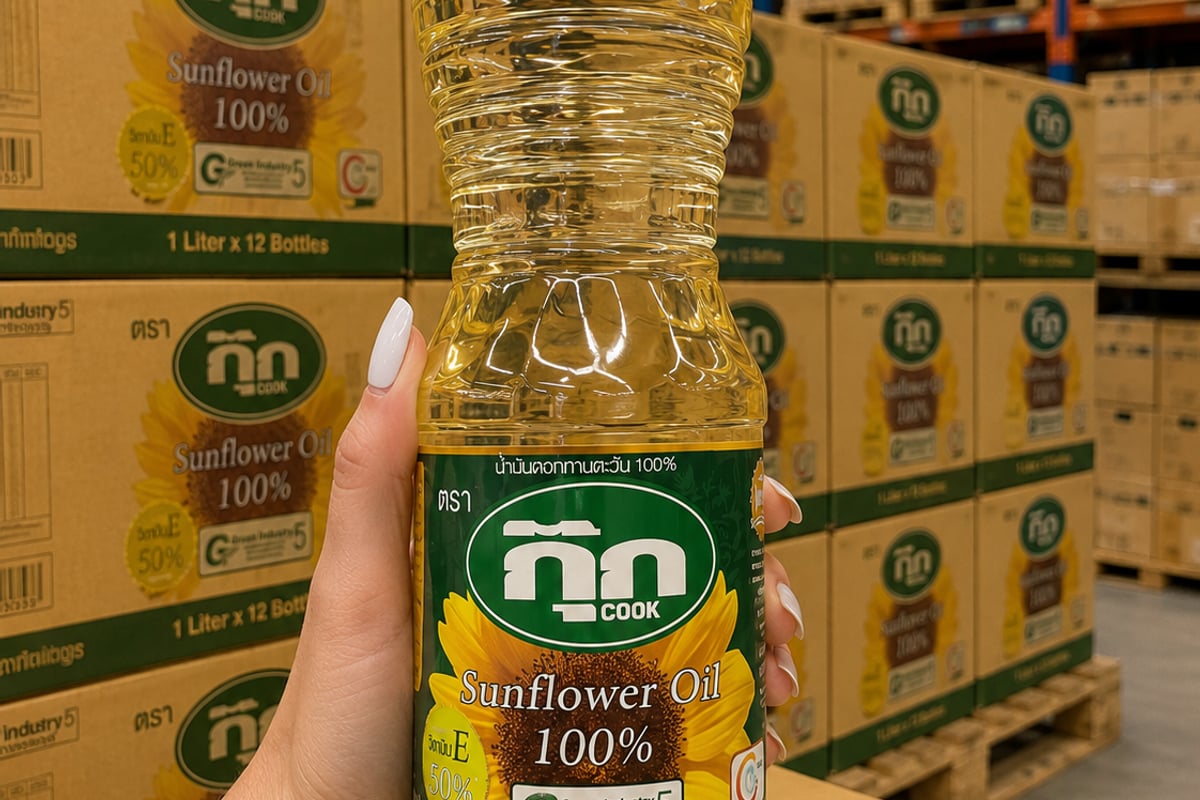
Thai Cooking Oils specializes in producing Refined Sunflower Oil through controlled refining processes that ensure consistent quality, neutral taste, and excellent stability. Our comprehensive quality control, flexible packaging options, and reliable export logistics make us a trusted partner for businesses requiring consistent sunflower oil supply from Southeast Asia.
Retail and Food Service Packaging
Suppliers serving the consumer market must accommodate branded packaging requirements:
- PET bottles: 1L, 2L, 3L, 5L consumer sizes with tamper-evident seals
- Glass bottles: Premium positioning with UV protection
- Bag-in-box: Foodservice applications with dispensing taps
- Sachets and pouches: Emerging markets and portion control
Packaging material selection affects shelf life through light transmission, oxygen permeability, and moisture barriers. Professional suppliers recommend appropriate materials based on distribution conditions, storage duration, and regulatory requirements.
Regulatory Compliance and Documentation Requirements
International sunflower oil trade involves complex regulatory frameworks varying by destination market. Competent suppliers navigate these requirements efficiently, minimizing customs delays and compliance risks.
Import Documentation Essentials
Commercial invoice provides detailed transaction information including product description, quantity, unit price, total value, and Harmonized System (HS) codes for customs classification.
Bill of lading serves as the shipping contract, receipt of goods, and title document. Clean bills of lading confirm receipt without noted damage or discrepancies.
Certificate of origin verifies manufacturing country, often required for preferential tariff treatment under free trade agreements or import quota management.
Phytosanitary certificates may apply when regulations classify vegetable oils as agricultural products requiring pest and disease freedom verification.
Destination-Specific Requirements
United States enforces FDA registration for foreign food facilities, Prior Notice requirements for shipment arrivals, and compliance with nutritional labeling standards under the Food Safety Modernization Act (FSMA).
European Union demands compliance with EC regulation frameworks including contaminant limits, labeling requirements, and traceability documentation throughout the supply chain.
Middle Eastern markets frequently require Halal certification from recognized Islamic authorities, with specific documentation standards varying by country.
Asian markets maintain diverse requirements ranging from China's stringent import registration systems to Southeast Asian harmonization under ASEAN frameworks.
Experienced sunflower oil suppliers maintain current knowledge of evolving regulations and proactively update documentation practices to ensure smooth clearance processes.
Building Strategic Supplier Relationships
Transitioning from transactional purchasing to strategic partnerships creates mutual value beyond basic commodity supply. Leading organizations cultivate supplier relationships that drive innovation, improve responsiveness, and enhance competitive positioning.
Communication and Collaboration Frameworks
Regular business reviews (quarterly or semi-annual) provide forums for discussing performance metrics, market trends, quality feedback, and future requirements. These structured dialogues build transparency and alignment between buyer and supplier organizations.
Joint forecasting processes improve supply chain efficiency by sharing demand projections, promotional plans, and growth initiatives. Suppliers equipped with forward visibility can optimize production scheduling, inventory levels, and capacity allocation.
Technical collaboration enables product development initiatives, application optimization, and quality enhancement projects. Suppliers with formulation expertise contribute valuable insights for new product launches or cost reduction programs.
Performance Measurement and Continuous Improvement
Objective performance tracking identifies improvement opportunities and recognizes supplier excellence:
- Quality metrics: Defect rates, specification compliance, consistency measures
- Delivery performance: On-time delivery percentage, order completeness, lead time adherence
- Responsiveness: Inquiry response time, issue resolution speed, flexibility
- Innovation contribution: New product support, technical assistance, cost reduction ideas
- Sustainability progress: Environmental footprint reduction, social responsibility initiatives
Balanced scorecards incorporating multiple dimensions provide comprehensive supplier evaluation beyond price and quality alone.

Risk Management and Supply Chain Resilience
The volatility demonstrated by global events in recent years underscores the importance of supply chain risk management when selecting sunflower oil suppliers. Comprehensive risk mitigation strategies protect business continuity while maintaining cost competitiveness.
Supplier Diversification Strategies
Geographic diversification reduces exposure to regional disruptions including natural disasters, political instability, or transportation bottlenecks. Maintaining qualified suppliers across multiple continents provides alternative sourcing options when primary supply routes face challenges.
Multi-supplier portfolios balance concentration benefits against supply security. While consolidating volume with fewer suppliers may achieve better pricing, maintaining 2-3 qualified alternatives ensures competitive tension and backup capacity.
Vertical integration assessment evaluates whether suppliers control upstream raw material sources or rely on third-party seed procurement. Vertically integrated suppliers often demonstrate better supply stability during agricultural commodity shortages.
Contingency Planning Elements
Robust supplier agreements address disruption scenarios:
- Force majeure clauses: Define extraordinary events excusing performance obligations
- Alternative sourcing provisions: Specify procedures for temporary third-party supply
- Safety stock requirements: Establish minimum inventory levels at supplier or buyer facilities
- Price protection mechanisms: Cap maximum price increases during shortage periods
- Communication protocols: Define escalation procedures for supply disruptions
Regular scenario planning exercises test contingency plans and identify preparedness gaps before actual disruptions occur.
Emerging Trends in Sunflower Oil Supply
The sunflower oil market continues evolving in response to consumer preferences, technological innovations, and sustainability imperatives. Forward-thinking suppliers adapt to these trends, creating opportunities for partners who recognize shifting dynamics early.
High-Oleic Sunflower Oil Growth
High-oleic varieties contain 80%+ monounsaturated fatty acids compared to 20% in conventional sunflower oil. This composition delivers superior oxidative stability, extending frying life and reducing trans fat formation. Food manufacturers increasingly specify high-oleic sunflower oil for snack foods, baked goods, and foodservice applications.
Qualified suppliers offer both conventional and high-oleic variants, with appropriate segregation and identity preservation throughout production and storage systems.
Organic and Non-GMO Certification
Consumer demand for organic certification and non-GMO verification continues expanding across developed markets. Suppliers serving these segments implement rigorous protocols:
- Certified organic seed sourcing
- Dedicated processing equipment or validated cleaning procedures
- Third-party verification and annual audits
- Complete traceability documentation
- Identity preservation throughout supply chain
Premium pricing for certified products (typically 15-40% above conventional) rewards suppliers investing in necessary infrastructure and certification costs.
Sustainability and Carbon Footprint Transparency
Corporate sustainability commitments drive demand for environmental transparency throughout the supply chain. Progressive sunflower oil suppliers provide:
Carbon footprint calculations quantifying greenhouse gas emissions from agricultural production through delivery, enabling buyers to assess Scope 3 emissions accurately.
Water stewardship metrics document water consumption efficiency and wastewater treatment effectiveness, particularly relevant for production facilities in water-stressed regions.
Biodiversity protection initiatives demonstrate responsible land management practices that preserve natural habitats and support ecosystem health in agricultural regions.
Social responsibility programs verify fair labor practices, community development investments, and smallholder farmer support initiatives throughout the supply chain.
Selecting the right sunflower oil supplier involves comprehensive evaluation of production capabilities, quality systems, commercial terms, and strategic alignment with your business objectives. By applying the frameworks outlined in this guide, you can establish partnerships that deliver consistent quality, competitive pricing, and supply chain resilience throughout 2026 and beyond. Thai Cooking Oils combines advanced refining technology, rigorous quality control, and extensive export experience to support food manufacturers, distributors, and retailers worldwide with reliable vegetable oil supply from our Thailand production facilities. Contact our team to discuss your specific sunflower oil requirements and discover how we can support your business growth.
